
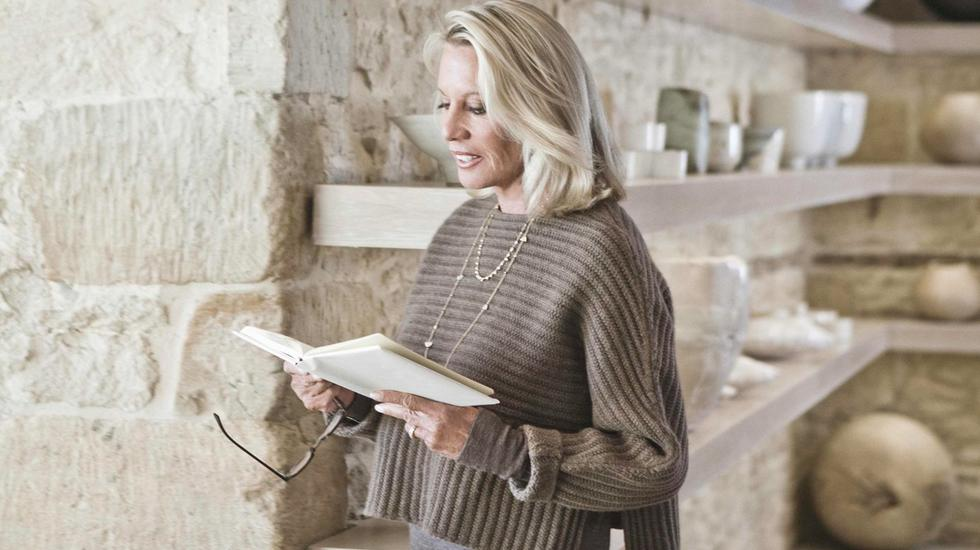
Lady Carole Bamford: Earth Alchemist
Beneath the honey-stoned arches of The Wild Rabbit’s 16th-century inn, a revolution simmers in cast-iron pots. Lady Carole Bamford—aristocrat-turned-soil-evangelist—presides over an empire where cacao-dusted venison meets biodynamic vineyards, proving sustainability needn’t sacrifice decadence.
From Garden Epiphany to Global Ethos The Bamford doctrine crystallized three decades ago during a Derbyshire garden crisis. “Watching chemical pesticides murder my roses—and nearly my daughter’s curiosity—felt like nature screaming through a megaphone,” she recalls. This botanical wake-up call birthed Daylesford Organic, now a labyrinthine ecosystem encompassing creameries kneading raw-milk brie, fields of heirloom wheat swaying like amber oceans, and zero-waste cafés where turmeric lattes steam beside bone broth.
Culinary Conspirators Her protégés—chefs Tom Aikens and Tom Kitchin—remain bonded through Bamford’s philosophy of “culinary archaeology.” “They excavate flavors,” she says, likening their Michelin-starred kitchens to Daylesford’s compost heaps—both transforming waste into wonder. The Toms’ seasonal menus mirror her farmshops’ rhythm: spring’s wild garlic pesto becomes autumn’s quince membrillo, each jar a timestamp of soil health.
Architectures of Abundance Bamford’s ventures form a symbiotic constellation:
- The Wild Rabbit: Cotswold stone walls cradle bedrooms swaddled in undyed linen, while the bar pours Léoube rosé through repurposed cider taps.
- Château Léoube: Provençal vineyards employing lunar-cycle pruning, their grapes destined for bottles wrapped in Bamford’s hemp-silk labels.
- Bamford Wellness: Cashmere-linen loungewear dyed with walnut husks, stitched by artisans trained in circular fashion.
Soil as Scripture Rejecting “pioneer” accolades, Bamford credits organic forebears—Eve Balfour’s worm-filled notebooks, Carlo Petrini’s Slow Food manifestos. Yet her impact radiates through metrics: Daylesford’s soil now sequesters 30% more carbon than neighboring conventional farms, while The Wild Rabbit’s kitchen waste fuels a biogas plant lighting 200 local homes.
The Bloody Mary Litmus Test Quality control happens over Sunday brunch: “If Adam’s venison with fig compote doesn’t pair with our house gin, we’ve failed,” she laughs. Her teams operate on a “biodynamic clock”—cheesemongers tracking Jupiter’s position, foragers consulting mycelium networks before harvesting wood-ear mushrooms.
Future Horizons Rumors swirl of a Bamford Seaweed Atelier harvesting Irish kelp for umami-rich broths, while her daughter’s Californian biodynamic farm trials AI-driven pollinator corridors. “True luxury isn’t scarcity,” Bamford muses, “but ecosystems so abundant they spill beauty effortlessly—like blackberries over a hedgerow.”
In Bamford’s world, sustainability wears gumboots and silk in equal measure. Her legacy? Proof that regeneration tastes exquisite—whether in a truffled egg from pasture-raised hens, or the first sip of a Bloody Mary mixed with horseradish grown where pesticides once lurked.

You May Also Like
