

Costa Rica’s Southern Pacific: Where Jungle Canopy Meets Architectural Alchemy
Beneath the emerald tangle of Corcovado’s rainforest, where scarlet macaws screech through ceiba trees and humpback whales breach in cerulean swells, a quiet revolution unfolds. Costa Rica’s southern Pacific coast—long overshadowed by Guanacaste’s resorts—has become a laboratory for eco-sensual design, where concrete cantilevers flirt with primordial wilderness and infinity pools mirror constellations unseen in light-polluted skies.
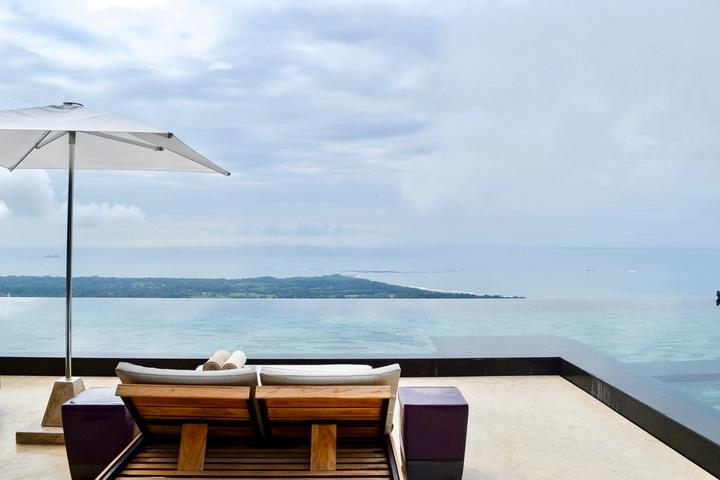
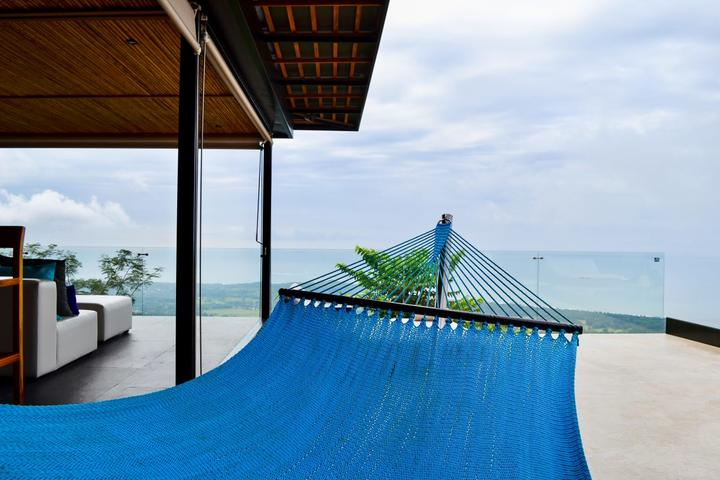
The Cliffside Manifesto Perched 305 meters above Marino Ballena’s whale-tail sandbar, Kura Design Villas emerges like a spaceship crash-landed in Jurassic Park. Biologist Alejandra Umaña and architect Martín Wells—partners in both life and tectonic rebellion—crafted this concrete-and-glass ode to “tropical minimalism.” Their formula? Five materials (steel, bamboo, teak, volcanic stone, glass) choreographed into cliff-hugging villas where floor-to-ceiling windows dissolve boundaries between jungle and sanctuary.
The couple’s radical pragmatism:
- Solar-heated plunge pools fed by seasonal waterfalls
- Bamboo privacy screens doubling as vertical gardens for epiphytes
- Bed frames carved from fallen guanacaste trees, their grain tracing centuries of storms
“We wanted the architecture to whisper,” says Wells, gesturing to cantilevered decks where howler monkeys outnumber guests. By day, villas disappear into mist; by night, LED constellations guide guests to open-air showers where bioluminescent fungi glow in recycled-water runoff.
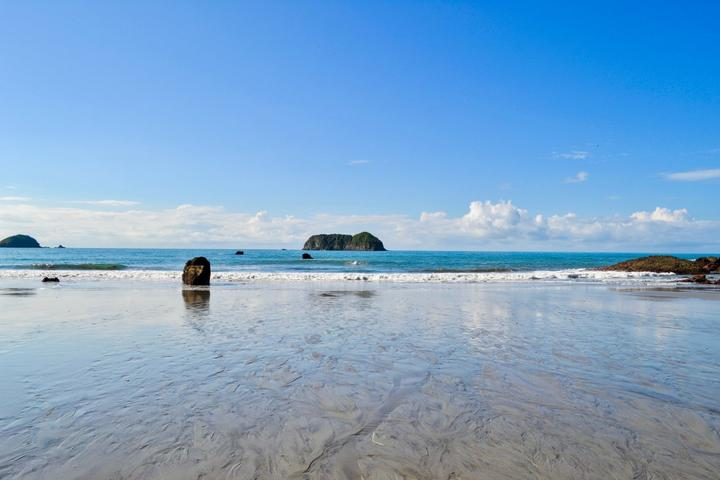
Marino Ballena’s Symphony Descend Kura’s vertiginous driveway to Whale’s Tail Beach, where from July to October, humpbacks nurse calves in protected coves. New bio-acoustic buoys now stream whale song to villa sound systems—a real-time aquatic concerto accompanying sunset passionfruit caipirinhas.
Manuel Antonio’s Green Paradox Two hours north, Arenas del Mar redefines luxury as ecological sleight-of-hand:
- Invisible Infrastructure: Buildings painted in “jungle neutrals”—moss, umber, decayed-mango—to evade monkey curiosity
- Blackwater Ballet: Waste transformed into liquid fertilizer for onsite cacao groves
- Poolside Physics: Saltwater infinity edges stabilized via electromagnetic ionization, eliminating chlorine’s chemical scream
General Manager Sofia Quesada’s pièce de résistance? A treetop mixology lab where cocktails incorporate ants farmed from leafcutter colonies—a zero-mile protein source served on biodegradable spoons carved from bamboo.
The New Conservationists This coast attracts a peculiar breed of traveler:
- Silicon Valley CEOs studying permaculture between surf sessions
- Parisian perfumers distilling monkey-paw orchid essences
- Retired architects volunteering as “eco-ambassadors,” tracking jaguars via AI-enabled camera traps
Their playgrounds?
- Night Kayak Safaris: Glow-in-the-dark plankton illuminating mangrove labyrinths
- Cloud Forest Canopy Labs: Zip lines doubling as data cables for real-time biodiversity mapping
- Farm-to-Beach BBQs: Organic chayote grilled over carbon-negative coconut-shell charcoal
Design as Ecosystem Local builders now follow the “Kura Doctrine”:
- Biomimetic Blueprints: Roofs angled to catch morning fog for greywater systems
- Circular Materiality: Demolished concrete crushed into artificial reefs
- Sensory Stealth: Wind turbines disguised as giant heliconia flowers
Even the coast’s latest arrival—Osa Flux, a carbon-negative treehouse resort—employs mycelium insulation that sprouts edible mushrooms during rainy season. “Guests harvest breakfast from their walls,” laughs chef Raúl Castro, serving lion’s mane ceviche on banana-leaf plates.
The Future Tastes Like Rain As traditional beach resorts obsolesce, this coastline charts a third way—where luxury isn’t extracted from nature, but converses with it. Checkout includes a “carbon receipt” detailing your stay’s reforestation impact. Forget souvenirs; visitors depart with jaguar-tracking app logins and DNA samples from hugged trees.
Here, sustainability isn’t a marketing ploy—it’s architecture’s new grammar. And as scarlet macaws arc over Kura’s solar-paneled horizon, one truth crystallizes: In Costa Rica’s southern wilds, the most radical design choice is leaving no trace beyond memories—and a rainforest that breathes easier for your having visited.


You May Also Like

Diving Deep into Chiang Mai

Samarkand: Where the Silk Road Whispers Secrets to the Stars
