
Arctic Solitude: A Creative Pilgrimage to Norway’s Edge
It’s 2PM, and the sun is already surrendering to the horizon as my plane glides above Norway’s fractured coastline. The wingtips glow molten gold against a sky streaked with tangerine and violet. By the time I collect groceries in Bodø and reach the dock, darkness will have swallowed the world.
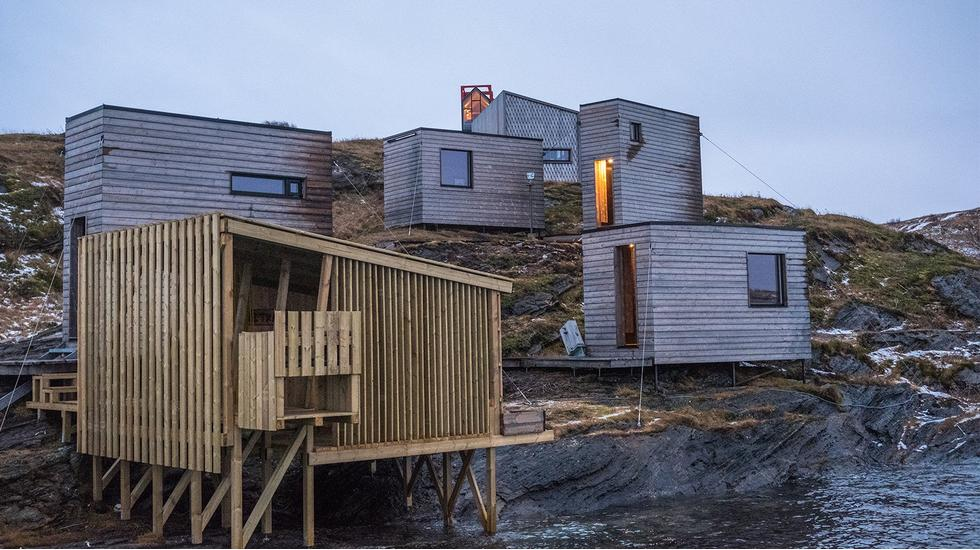
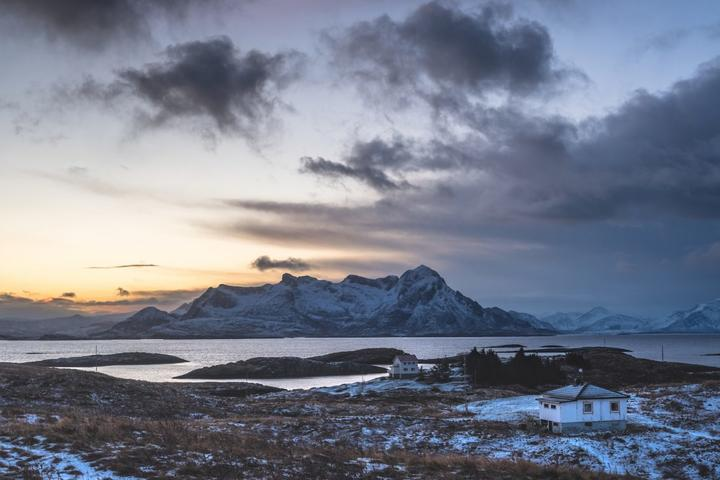
My destination lies north of the Arctic Circle: Fordypningsrommet, a cluster of 11 geometric cabins clinging to the rocks of Sørvær, an island in the Fleinvær archipelago. The name translates to “room for immersion,” a poetic label for a place designed to sever visitors from routine. With over 300 islands sprawled across this remote corner of Norway, winter reduces the population to a handful of stoic souls. For five December nights, I’ll join their ranks.
I’ve come to write. The logic feels absurd—two flights, a ferry, and a plunge into subarctic isolation, all to confront a blinking cursor. Yet Fordypningsrommet’s founder, composer Håvard Lund, envisioned this retreat as a crucible for creativity. Artists apply to stay gratis, trading noise for the stark poetry of sea and stone. I’ll be his first midwinter guinea pig.
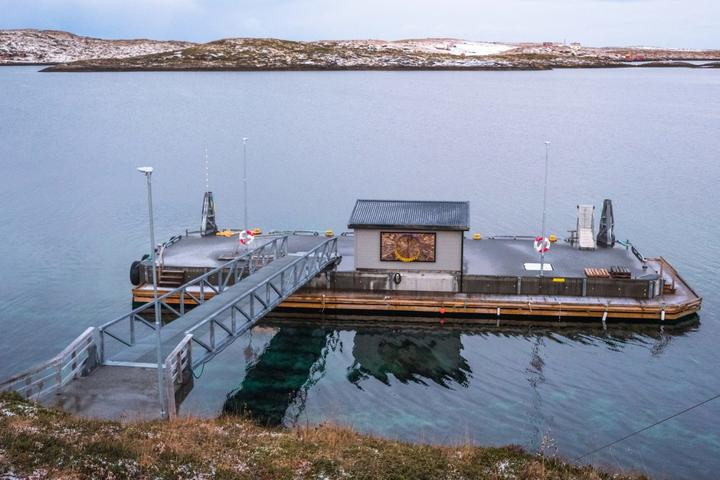
The ferry ride is a baptism of salt spray and shadow. Waves slam the hull as we dart between islands, each stop dimmer than the last. At Sørvær, an elderly man barks urgent Norwegian at me. We volley mutual incomprehension until a teenage boy pries open the stubborn hatch. I stumble onto the dock, groceries clutched like contraband, and meet Håvard’s grin.
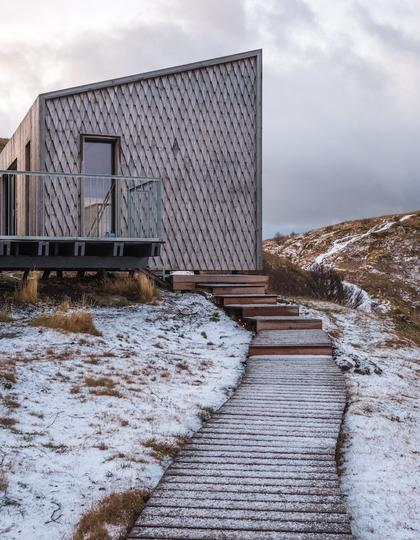
The retreat materializes in fragments: angular silhouettes sheathed in Kebony wood, a sustainable material mimicking weathered driftwood. The cabins—scattered like dice tossed by a giant—hug the terrain with minimal intrusion. Each serves a monastic purpose: kitchen, studio, bathhouse, sleeping cells. No clutter, no excess.
Håvard stays the first night, his enthusiasm contagious. Over reindeer stew, we dissect creativity’s paradoxes—the tyranny of phones, the ache for quiet, the courage required to make art. Later, we walk beneath a bone-white moon, wind scouring our cheeks raw.
Alone the next morning, exhilaration curdles into unease. The silence is oceanic. I open my laptop, expecting productivity, but the landscape hijacks me. How to write anything but this? The light—pale and fleeting as a moth’s wing—transforms the ordinary. Dawn bleeds into dusk within hours. Squalls rage, then vanish, leaving the sea polished like obsidian.
Days blur into ritual. Mornings begin with coffee brewed on a gas stove, breakfast savored while reading by windowlight. Dressing becomes ceremony: wool layers, insulated boots, the perpetual tug-of-war between warmth and mobility. I write in bursts, stealing glances at the fjord.
Adventures puncture the solitude. A neighbor ferries me to feed sheep on a neighboring isle, our speedboat slicing through pewter waves. I fire up the sauna, its cedar-planked heat a reprieve before the obligatory Arctic plunge—a shriek-inducing dash into the sea. One midnight, the aurora erupts: neon ribbons writhing above the studio, turning snowdrifts emerald.
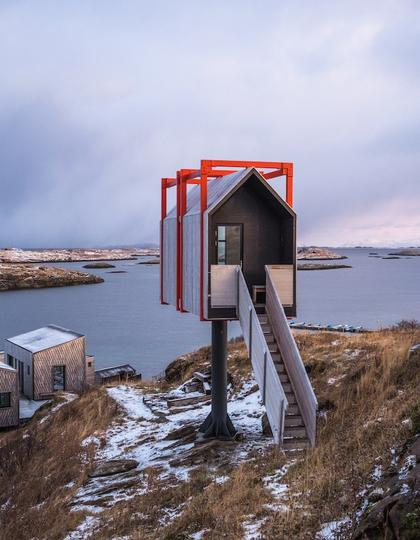
The cabins themselves shape the rhythm. I rotate beds like a nomad—climbing a ladder to a lofted nest, then migrating to the Njalla, a glass-walled tower crowned with a writing desk. From this aerie, the archipelago unfolds: islands adrift in indigo, pinprick lights on distant shores. No curtains, no buffers. You sleep with the dark as a companion.
By week’s end, I’ve filled a notebook. Poems about sauna steam crystallizing on eyelashes, about the sheep’s alien pupils, about the way wind sculpts snow into hieroglyphs. The final morning, I climb the hill behind the Njalla. Mountains rise like broken teeth; the sky bleeds coral and saffron. A swell of pride cuts through the cold—I’d wrestled silence into art.
Only later, aboard the ferry to Bodø, does Håvard mention the storm that nearly stranded me. Winds had shuttered the airport and paralyzed boats. I’d spent those final hours oblivious, photographing icicles and scribbling lines, while the elements conspired to keep me marooned.
Now, back in the urban cacophony, I crave the island’s ruthless clarity. Fordypningsrommet offers no epiphanies, only a mirror: in that vastness, you confront what you’ve carried inside all along. The retreat isn’t an escape—it’s an X-ray. And sometimes, that’s the kind of room we need most.

You May Also Like

Jazz Reimagined: New York’s Sonic Revolution

Into the Wild Heart of Africa: Exploring Virunga’s Volcanic Peaks & Primates
